


At-Home Teeth Whitening: Evaluating your DIY Options
Medically Reviewed by: John H. Krell, DDS
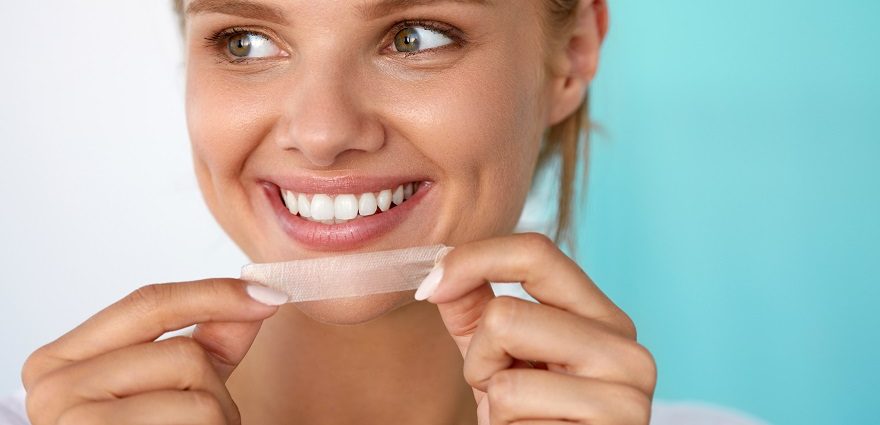
If you’re looking for an alternative to professional bleaching in a dental office, then do-it-yourself at-home whitening might be right for you. There are dozens of DIY options available for every budget and temperament – whether professionally dispensed, store-bought or sold on the Internet. Many teeth whiteners are pre-mixed and ready to use; others require mixing at home.
It may surprise you to learn that many dental professionals believe that dentist-dispensed whitening trays and whitening strips – when used as directed – can be even more successful than in-office bleaching over the long haul. A key reason is their ongoing use, combined with the fact that small amounts of bleach remain within the tooth structure for up to 36 hours. When a new dose of bleach is applied to a tooth retaining the previous day’s peroxide, its effect is greater.
However, there are pitfalls to teeth whitening your teeth at home. For example, if you have an underlying condition like tooth decay or gum disease, you could end up enduring extreme pain depending on the concentration of peroxide used. The following article should help you evaluate all the pros and cons of DIY whitening.
Advantages of At-Home Treatment
- Long-term results: Dental professionals agree that the only way to maintain your whitened teeth is with at-home bleaching products, repeated regularly – preferably every four to six months. But lately, many dentists are advising people with very dark-stained or tetracycline-affected teeth to continue home bleaching over a period of months (or up to a year) for optimal results. What’s interesting is, the newest strips on the consumer market are intended for five-minute use every day, like brushing or flossing.
- Variety: You have a choice of whitening trays, strips or paint-on products, as well as numerous accessories.
- Convenience: You can whiten at any time of the day or night, for short or extended periods.
- Portability: You can also use strips while on the go or at the office.
- Cost: Over-the-counter whiteners range from $4 to $100, while dentist-dispensed products cost approximately $400. By contrast, in-office whitening costs an average of $650 per session.
Don’t Over do it!
Although you can get over-the-counter whiteners without a dentist’s recommendation, if you over-use them or use them incorrectly, they can harm your tooth enamel and irritate your gum tissue. Also, over-bleaching can produce an undesirable bluish hue, chalky whiteness or uneven results (otherwise known as “the technicolor effect”).
Supervision by a dentist can prevent these problems. To ensure the health of your smile, see your dentist before choosing an over-the-counter tooth whitener and beginning the bleaching process. Dentists know a lot about these products and can help you choose the right one and use it correctly.
Also keep in mind:
- The stronger the peroxide formula, the more rapid its effect; the weaker the formula, the longer it can remain on the teeth safely. A low-percentage bleach used overnight every night of the week will produce about the same results as a high-percentage “day-bleach” that stays on the teeth one hour per day for seven days.
- The best time to begin at-home whitening is soon after a dental hygienist’s prophylactic cleaning. This procedure removes the surface layer of plaque and grime that can interfere with bleaching.
- Dentists and oral care companies urge brushing and flossing the teeth just prior to any kind of at-home or on-the-go whitening.
- For best results, don’t consume food or beverages (excluding water) for a couple of hours after treatment.
Dentist-Dispensed Take-Home Whitening Trays
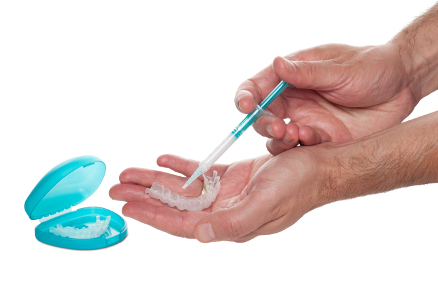
According to dental professionals, the best bleaching results come from dentist-dispensed take-home kits – particularly those that are used over extended periods. These kits contain higher percentages of bleach than over-the-counter kits and typically consist of:
- Custom-fitted application trays made of a flexible plastic material. Custom trays cost about $100 and offer several benefits:
- They help ensure that the bleach stays in contact with the teeth, for maximum effect.
- They help prevent saliva from coming into contact with the bleaching agent (which can dilute its strength).
- They minimize the amount of bleach that can dribble onto (and potentially irritate) the gums.
- Bleaching compounds are either pre-loaded into the trays or stored in syringes and added to the trays just before use. In many cases, your dentist can fine-tune the bleach concentration and add a desensitizing agent to use before or after application. Generally the kits provide enough gel for one two-week treatment per year, plus one- or two-day touch-ups every four to six months.
Whitening Strips
Coated with a bleaching gel, these thin, flexible membranes are designed to conform to the shape of the teeth. They are very convenient and easy to use – no mixing or molding is required. What’s more, they are unobtrusive enough to be worn on the job or while commuting or shopping.
However, strips are less effective than trays for removing between-the-teeth stains and are not suitable for crooked teeth. In addition, saliva can more easily find its way beneath strips, diluting their potency. Some strips aren’t long enough to cover a wide smile, and they tend to slip and slide.
Crest Whitestrips Supreme, containing 14 percent hydrogen peroxide – the highest dose currently available in whitening strips – are dispensed at dentists’ offices. These strips are wide enough to cover up to six teeth.
Approximate cost for a box of 84 strips (three-week supply): $50. Over-the-counter strips cost in the $20 to $45 range.
Brush-On Whiteners
Pens with brush-on or foam-tip applicators provide what has been billed as fuss-free instant whitening. Used directly after meals or in daily regimens, as alternatives to trays and strips, these whiteners are often considered instant “antidotes” to new stains from food, especially just-consumed red wine.
But dental professionals are divided as to the effectiveness of paint-on whiteners. Some consider them useful adjuncts to in-office or tray bleaching. Others have yet to see any meaningful results with these whiteners.
Cost: $12.99 to $99.95
Toothpaste
Technically speaking, all toothpastes are whitening toothpastes, since they remove surface plaque and debris. But only a few contain key whitening ingredients: chemical bleaching agents and abrasives in high concentrations.
When used regularly, these toothpastes may offer backup support for tooth whitening. Of course, given that brushing time is limited to a minute or two, that support is minimal. But since we all brush every day, some consider whitening toothpastes to be potential bleaching enhancers.
Toothpastes with Peroxide
Because toothpaste foams all over the mouth and is swallowed, the percentage of any bleach it contains is low, to avoid irritation.
Toothpastes with Abrasives
Most toothpastes clean the teeth with finely ground abrasives such as silica, aluminum oxide, calcium carbonate and baking soda. Whitening toothpastes contain more of these abrasives – though the paradox here is that overuse can cause more stains and can also dull the surface of dental crowns and veneers.
Floss
Floss may seem like an unlikely part of the tooth-whitening regimen, particularly as it is in contact with the teeth for only a second or two. But over the long haul, using floss daily may assist with stain removal in the narrow space between the teeth, an area that even in-office bleaching has a hard time reaching.
Whitening floss differs from standard dental floss in its use of mild abrasives, typically silica.
[updated March 27, 2019]
About the Reviewer

John H. Krell, DDS is a top Houston family dentist committed to dental aesthetics, high-quality patient care and compassion. Harnessing state-of-the-art, forward-thinking technologies and a conservative approach to dental care, Dr. Krell strives to provide his patients with the best available treatments focused on prevention in a calming and welcoming practice environment. Hailing from a family of dentists, Dr. Krell works alongside his brother to cater to the dental care needs of patients in and around Houston. Learn More

Charcoal DIY Teeth Whitening: Does it Work & is it Safe?
You're no doubt aware of a variety of popular teeth whitening treatments like bleaching trays & DIY strips. But charcoal?...
Read More >>
Are You Happy With Your Smile?
We asked our readers a number of questions, including whether or not they were happy with their smile. See what...
Read More >>
5 Foods and Drinks to Avoid after Whitening
Get the most out of your teeth whitening transformation by avoiding foods and drinks that are likely to stain your...
Read More >>
Pros and Cons of DIY Teeth Whitening
Teeth whitening is the most popular cosmetic treatment, but is professional in-office whitening a better option than DIY at-home whitening?
Read More >>