


Britesmile Teeth Whitening
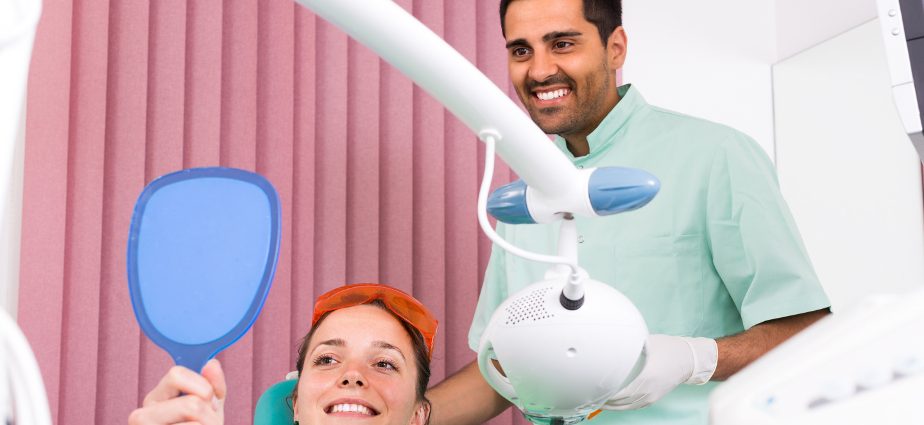
If you’re looking for teeth whitening performed at the hands of an experienced professional, you’ve got numerous options to choose from. Known for its gentleness and ease of access, the Britesmile teeth whitening system is available at participating dental practices and self-standing Britesmile locations throughout the country. This popular whitening treatment can significantly improve the appearance of dulled or otherwise discolored teeth in a single office visit.
Although studies have shown that at-home whitening products may elicit similar results to those produced in-office, there is no substitute for the professional touch and careful monitoring that allow for safe and immediately visible results. An at-home regimen takes significantly longer to produce results.
The Britesmile whitening procedure uses a combination of a hydrogen peroxide gel and a specially designed lamp that accelerates the process. Dental practices offer both a 15 and 25 percent gel, while Britesmile facilities feature only the 15 percent gel.
The gels are pH balanced, compatible with tooth enamel, and specifically formulated to respond to the blue wavelength of the activation lamp. They also contain glycerin and water to help prevent tooth dehydration. The light, which is said to be safe for tooth enamel, skin, gums and other soft tissue, is shaped to illuminate and whiten all upper and lower teeth in the smile line at the same time.
Consultation and Treatment Planning
Before deciding whether Britesmile is right for you, your dentist will first conduct a comprehensive examination of your teeth and gums to ensure proper health, as well as talk with you about your oral hygiene and lifestyle habits to determine if you will benefit from tooth whitening. This will help you and your dentist agree on the product or technique that’s best for you.
Your dentist also may require you to undergo whitening if you are planning other cosmetic dental procedures — such as veneers or composite bonding — in order to ensure a better match between the restoration and your natural dentition, or after the removal of braces. Depending on the condition of your teeth and your goals for changing the look of your smile, tooth whitening may not be your best option.
What’s Involved?
Before undergoing the Britesmile whitening procedure, your dentist will perform a routine dental cleaning before applying the appropriate concentration of whitening gel to your teeth.
The Britesmile blue light then will be positioned over the teeth and illuminated to activate the gel throughout the oxidation process. During this time, you can watch TV, listen to music or nap. Generally, the gels are applied to the teeth for three 20-minute intervals.
It’s recommended that you not do this process while nursing or pregnant, receiving orthodontic treatment, or have extensive dental work, such as veneers or crown/bridges. These factors will be reviewed by a dentist at your initial consultation
Aftercare: Maintaining Whitening Effects
To help maintain the whitening effects of your Britesmile treatment, your dentist may advise you to avoid certain foods and beverages, or to consume them in moderation, to avoid staining your teeth. This may include tea, coffee, red wine, cola, etc.
(Check out our slideshow on 5 foods and drinks to avoid after whitening)
Tobacco products will stain teeth, even after whitening treatments. As such, your dentist will suggest you quit using them. Maintain an appropriate oral hygiene (teeth brushing and flossing) regimen to prevent stains from reforming, and see your dentist and hygienist regularly for scheduled teeth cleanings.
Toothpastes containing whitening agents also may be suggested by your dentist to maintain the results of the procedure.
Cost and Treatment Time
The cost of Britesmile whitening varies depending on your unique considerations and the location in which you undergo treatment. If your treatment takes place at a Britesmile center, the average cost is approximately $600. If you elect to pay in advance, the average cost drops to $399. Keep in mind that dental insurance does not cover the costs associated with elective, cosmetic treatment.
Although treatment time varies, most patients experience approximately one hour of chair time.
Further Reading:
- Lumibrite Whitening: Illuminate Your Smile
- Opalescence Whitening: Give Your Smile a Boost
- Zoom Whitening: See the Light and Unleash Your White