

Buy Clomid (Clomiphene) Online to Restore Ovulation Cycle
Online Pharmacy | E-Prescriptions »
- By Dr. Alexandra Sundermann MD (Gynecologist)
- Medically reviewed by Dr. Dennis Weaver MD (Gynecologist)
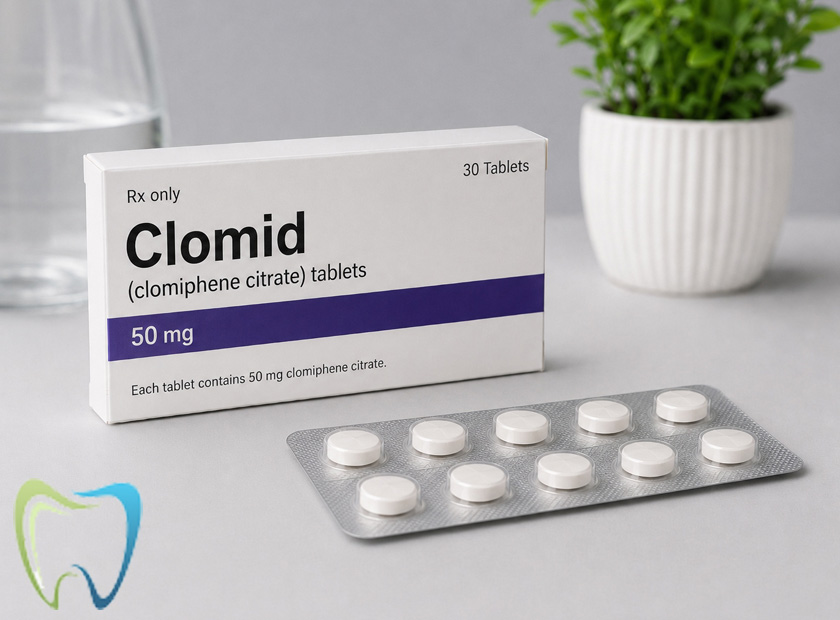
Buy Clomid online and start clomiphene the first-line oral fertility pill that restores monthly ovulation for many women trying to conceive naturally. The pill resets the hormonal signal that controls when the ovaries release an egg. It works during the first half of the cycle and lets the rest unfold naturally. Just five tablets per cycle is the entire course. For women whose cycle has gone quiet, one course returns a missing rhythm. That small shift opens a real chance at pregnancy.
Clomid Explained: First-Line Fertility Pill
Clomid is one of the best-known medications used to support ovulation. Its active ingredient is clomiphene citrate. The goal is simple to understand: help the ovaries release an egg when ovulation is irregular or absent. For many women, Clomid comes up after months of unpredictable cycles or trouble getting pregnant. It is not a universal answer for infertility. It is most relevant when the main issue is that the body is not releasing an egg regularly. The medication works in an indirect way. It does not add estrogen or progesterone. Instead, it changes how the brain responds to the body’s own estrogen signal. That shift may encourage stronger hormonal messages to the ovaries.
- Active ingredient:Clomiphene citrate
- Class:Selective estrogen receptor modulator (SERM)
- Main use:Ovulation support in selected women with anovulation
- Care setting:Used as part of clinician-guided fertility care
- Additional clinical use:Sometimes discussed for selected men under specialist care
This is why Clomid should not be treated like a simple “fertility shortcut.” The decision depends on the cause of infertility, cycle history, hormone patterns, and basic safety checks. Some people search for buy Clomid online while looking into treatment options, but that search should lead to a proper medical review, not self-selection.
In the right situation, Clomid can help restart ovulation. In the wrong situation, it may waste time or add avoidable risk. A clinician usually looks at the full fertility picture before deciding whether it fits.
Medical background is available in the StatPearls clomiphene citrate monograph. Many people call Clomid a fertility pill, and that wording is easy to understand. Still, the medication is more specific than that. It works through hormone signaling, so the right diagnosis and follow-up are part of safe use.
How Clomid Helps Ovulation Start
Clomid works through the body’s own hormone signals. The key area is the hypothalamus, a small part of the brain that helps control the reproductive cycle. When Clomid affects estrogen receptors there, the brain responds as if estrogen activity is lower than expected.
That response sets off a chain reaction. The brain sends a stronger message to the pituitary gland. In turn, the pituitary releases more follicle-stimulating hormone, called FSH, and luteinizing hormone, called LH.
FSH helps the ovaries prepare a follicle. LH is the signal that helps a mature follicle release an egg. This whole pathway is called the hypothalamic-pituitary-ovarian axis. In simple terms, Clomid works near the top of that pathway and encourages the cycle to move forward.
For a more clinical overview, the Mayo Clinic clomiphene reference explains how the medication is used in fertility care.
This process is still body-led. Clomid does not directly release the egg by itself. It helps create the hormonal conditions that can make ovulation more likely in the right patient.
There is one important detail. Because Clomid can affect estrogen activity in more than one tissue, some women may notice changes in cervical mucus or the uterine lining. This is one reason doctors may follow the cycle with tests or ultrasound. The goal is not only to trigger ovulation, but to make sure the response is safe and useful.
Best Candidates for a Clomid Cycle
Clomid is usually considered when ovulation is the main issue. Some women do not release an egg regularly. Others have long, unpredictable cycles or no clear ovulation pattern at all. In these cases, Clomid may help the body restart a more regular ovulatory rhythm.
Still, it is not a universal fertility fix. Clomid cannot open blocked fallopian tubes. It will not correct severe endometriosis or solve a sperm-related cause of infertility on its own. This is why the first step is not just choosing a medication. The first step is understanding what is actually getting in the way.
A good candidate often has irregular or absent periods. Testing may suggest that ovulation is weak or missing. Imaging may show that the uterus and ovaries look suitable for treatment. A clinician may also check whether the fallopian tubes are open and whether the partner’s semen analysis looks normal. In this context, clomid for women makes the most sense when the missing piece is ovulation.
- Periods are irregular, far apart, or absent for reasons unrelated to pregnancy
- A clinician has confirmed polycystic ovary syndrome
- Progesterone testing suggests weak or absent ovulation
- The cause is still unclear, and the couple wants a careful first treatment step
- Age, ovarian reserve, and general health support trying oral fertility care
Age matters. Clomid works best when ovarian reserve is preserved. Women under 35 generally see better cumulative outcomes. Women over 38 may still benefit, but the treatment window is shorter. A clinician should review anti-Müllerian hormone and antral follicle count before recommending repeated cycles.
Clomid Outcomes in Women With PCOS
Polycystic ovary syndrome is one of the most common reasons ovulation becomes irregular. In PCOS, the ovaries may contain many small follicles that do not mature in the usual way. Hormone signals can also become uneven. As a result, periods may come late, become unpredictable, or stop for months.
For women with PCOS, Clomid is often discussed when the main goal is to restart ovulation. It does not treat every part of PCOS. Its role is more specific. The medication may help the body create a cycle where an egg can be released.
Results are usually better when the case is selected carefully. Many women with PCOS do ovulate with Clomid, but ovulation does not always mean pregnancy. Age, weight, insulin resistance, ovarian reserve, sperm health, and timing all affect the outcome. This is why doctors look at the full picture, not just the diagnosis.
Body weight can make a real difference. In women with obesity, even modest weight loss may improve hormone balance and support ovulation. Insulin resistance can also affect the response. In some cases, a clinician may consider metformin as part of the wider PCOS plan.
According to the American College of Obstetricians and Gynecologists patient guide, ovulation induction is one treatment option for women with PCOS who want to become pregnant. Another oral option may be considered in some cases, especially if Clomid does not lead to pregnancy after monitored attempts. The choice should depend on the full medical picture.
Clomid is not meant to manage the metabolic side of PCOS. It does not reduce long-term heart risk, remove excess hair growth, or correct insulin resistance by itself. Its job is narrower. It helps open an ovulatory window, while the rest of PCOS care continues in parallel.
Clomid for Male Fertility and Low T
Clomid is sometimes discussed in male fertility care, especially when low testosterone and sperm production are part of the same problem. People often search for Clomid for men when they want to understand this option. This is not an FDA-approved use for men, but some urologists and endocrinologists may consider it in carefully selected cases.
The reason comes down to hormone signaling. In men, Clomid can affect the same brain-to-gland pathway involved in testosterone and sperm production. The brain may send stronger signals to the pituitary gland. The pituitary then releases hormones that tell the testes to make testosterone and support sperm development.
This is different from standard testosterone replacement. Gels and injections can raise testosterone, but they may also suppress sperm production. That can be a problem for men who still want children. Clomid may be considered when a specialist wants to support testosterone without shutting down the body’s own fertility pathway.
The American Urological Association patient resource on male infertility explains why male fertility treatment starts with a full evaluation, not just a hormone result. A low testosterone number alone is not enough to decide on treatment.
- Possible setting:Low testosterone with a fertility concern
- Specialist involved:Usually a urologist or endocrinologist
- Main reason:To support the body’s own hormone pathway
- What doctors check:Testosterone, LH, FSH, estradiol, and semen analysis
- Key limit:It does not help every cause of male infertility
The right candidate needs more than one abnormal lab result. A specialist will usually look at testicular function, medical history, medications, semen analysis, and possible structural causes. Primary testicular failure, severe varicocele, post-vasectomy infertility, or age-related fertility decline may need a different plan.
Side effects in men are often mild, but they still matter. Some men report mood changes, headaches, or breast tenderness. Vision changes are uncommon, but they should not be ignored. Long-term safety data in men are also more limited than the data for female fertility care. That is why this use belongs in specialist care, not self-treatment.
Buy Clomid Online: Pricing and Telehealth
Many patients choose to buy Clomid online when they want a more private and convenient way to start fertility care. A licensed telehealth service can make the first step easier, especially for people who do not want to book an in-person fertility clinic visit right away. Where can I buy Clomid safely from home? The safest option is a service that includes a real medical review, clear eligibility checks, and dispensing through a verified pharmacy.
When you buy Clomid through our service, the process stays straightforward. You complete a short intake form, and a licensed clinician reviews your health history and available lab details. If Clomid is appropriate for your case, the prescription is sent to a verified pharmacy. The medication is then shipped in discreet packaging, and follow-up care is arranged so your response can be monitored safely.
The decision to buy Clomid online should still go through medical screening. A short Clomid buy through an unregulated site may seem cheap. The hidden cost is real. Without an evaluation, the wrong patient may take the wrong dose, miss a contraindication, or skip the imaging that should come first. A proper telehealth flow protects against that.
Complete the eligibility self-check and intake form online.
A licensed clinician reviews your history and labs on a private call.
If appropriate, your prescription is sent to a verified pharmacy.
Telehealth Gynecologists

Generic Clomiphene: Same Molecule Lower Cost
Generic clomiphene has the same active ingredient as brand Clomid. The medication is built around the same molecule and the same intended effect. What usually changes is not the active ingredient. It is the manufacturer, inactive ingredients, packaging, and price.
In the United States, generic medications must meet FDA standards for bioequivalence. This means generic clomiphene has to deliver the active ingredient in a way that matches the brand product closely. For most patients, the expected medical effect should be the same when the prescription is appropriate.
Price is the part many people notice first. Brand Clomid can be expensive at retail pharmacies, especially without insurance. Generic clomiphene usually costs much less. For someone who may need more than one monitored cycle, that difference can matter.
For couples who buy Clomid online because of cost, generic clomiphene is often the practical starting point. The goal of treatment does not change. The financial pressure may be lower. A clinician can still choose the brand version if there is a specific reason, but many prescriptions are written for the generic form.
There is one important caution. Generic clomiphene is not the problem. The source is what matters. A clomid buy online through a regulated clinic and a licensed pharmacy is very different from ordering from an unverified vendor. The real risk comes from sellers that do not require proper medical review, do not show clear pharmacy credentials, or cannot prove where the medication comes from.
Tests You Need Before Starting Clomid
Before starting Clomid, a clinician usually wants to understand the full fertility picture. The goal is not to order every test possible. The goal is to confirm that ovulation is part of the problem and that Clomid is a reasonable next step.
Some checks are simple blood tests. Thyroid-stimulating hormone and prolactin can show whether another hormone issue is affecting the cycle. A pregnancy test is also needed before treatment begins. Progesterone testing may help show whether ovulation is happening. Anti-Müllerian hormone can give a basic idea of ovarian reserve.
Imaging can also be useful. A pelvic ultrasound helps the clinician look at the ovaries and uterine lining. It may also show cysts, fibroids, or polyps that need attention. In many cases, the workup also includes a check of the fallopian tubes and a recent semen analysis for the male partner.
- Recent pregnancy test before treatment starts
- Thyroid-stimulating hormone and prolactin
- Anti-Müllerian hormone and antral follicle count
- Pelvic ultrasound to review the ovaries and uterine lining
- Tubal patency assessment if it has not been done recently
- Recent semen analysis for the male partner
- Review of current medications, supplements, and chronic conditions
This workup can feel like an extra step, but it helps avoid guesswork. If the main issue is not ovulation, Clomid may not move the process forward. A clear evaluation also helps the clinician choose how closely the cycle should be followed.
A good pre-cycle plan should also set expectations. The patient should know what will be monitored, when follow-up is needed, and what signs should be reported. That makes treatment less stressful and reduces the chance of repeating a step that is not helping.
How Clomid Dosage Is Planned
Clomid dosing is usually planned one cycle at a time. The starting point is often simple: a short five-day course early in the menstrual cycle. From there, the clinician looks at whether ovulation happened and how the ovaries responded.
The most common starting plan is 50 mg once daily for 5 days. This is often enough for women who are sensitive to ovulation medication or who have PCOS. A higher dose is not automatically better. In some cases, it can raise side effects without improving the result.
If ovulation does not happen with the first cycle, the prescriber may adjust the next one. A common next step is 100 mg once daily for 5 days. This is usually considered only after the first dose has been reviewed. Pregnancy should also be ruled out before another cycle begins.
Some older protocols mention 150 mg, but many clinicians do not rush to that level. If the ovaries do not respond after lower doses, the better move may be a new plan, closer monitoring, or referral to a fertility specialist. Repeating the same approach for months without progress can waste valuable time.
For a clear medical baseline, the DailyMed Clomid label describes the recommended starting dose and when dose escalation may be considered.
The numbers help patients understand what to expect, but they are not a self-treatment plan. Clomid works inside a narrow cycle window. The right dose depends on diagnosis, safety checks, ovarian response, and whether ovulation actually happens.
A missed dose or a delayed start should be handled with the prescriber. Doubling up can disrupt the cycle and may increase side effects. It is safer to ask for instructions than to adjust the schedule alone.
Inside a Monitored Clomid Cycle
A monitored Clomid cycle means the treatment is followed more closely than a basic prescription cycle. The doctor does not just give the medication and wait. They check whether the ovaries are responding, whether ovulation is likely, and whether the cycle is moving in a safe direction.
This kind of follow-up is useful when timing matters or when the response is harder to predict. Women with PCOS, irregular cycles, previous non-response, or higher age may need closer monitoring. Others may only need home tracking and a follow-up visit. The level of control depends on the case.
Clomid is usually taken as a short course early in the menstrual cycle. After that, the body needs time to respond. The goal is for one or more follicles to mature and for ovulation to happen later in the cycle. This is why the medication is only one part of the process. The follow-up shows whether the body actually reacted.
Ultrasound is often the most useful check. It can show how the follicles are growing and whether the uterine lining looks ready. If the lining is too thin or too many follicles are developing, the clinician may adjust the plan in the next cycle. These details are hard to judge from symptoms alone.
Home tools can also help. Ovulation predictor kits may detect the LH surge before egg release. Basal body temperature can show a small rise after ovulation. Cervical mucus may also change during the fertile window. These signs are not perfect, but they can help patients understand what is happening between visits.
Some monitored cycles include an extra step to control timing more precisely. For example, a clinician may use a trigger shot when a follicle looks ready. This is more common when Clomid is paired with procedures such as intrauterine insemination. It is not needed for every patient.
Monitoring also helps avoid repeating a plan that is not working. If several cycles pass without ovulation or pregnancy, the doctor should review the results. Sometimes the dose, timing, or entire strategy needs to change. A short reassessment can save months of waiting.
Signs Clomid Is Working in Your Cycle
There are two main ways to understand whether Clomid is working. One is how the body behaves during the cycle. The other is what testing shows. Both are useful. When patients understand these signals, the process feels less random and easier to follow.
Physical signs often appear around the middle of the cycle. Some women feel mild pelvic twinges near ovulation. Cervical mucus may become clearer, thinner, and more stretchy. Basal body temperature can rise slightly after egg release. Libido may also increase during the fertile window. These signs do not happen for everyone, but they can suggest that the cycle is responding.
- A positive ovulation predictor kit around cycle day 12 to 16
- Clear, stretchy cervical mucus during the fertile window
- A small but steady rise in basal body temperature after ovulation
- A mid-luteal progesterone level above 5 ng per mL, often well above
- A mature follicle and a healthy uterine lining on cycle-day-12 ultrasound
- A regular period at the expected interval, or a confirmed pregnancy
Outcome numbers can also help set expectations. In well-selected patients, about 70 to 80 percent ovulate on some dose of Clomid. About 30 to 40 percent become pregnant within six ovulatory cycles. Many pregnancies happen in the first three cycles. After that, each additional cycle usually adds less benefit. Clinicians often review progress around three cycles and again around six.
Multiple pregnancy is another outcome to keep in mind. The twin rate with Clomid is roughly 5 to 8 percent. Higher-order multiples are less common, but they can happen. This is one reason monitoring matters. It helps the prescriber see when more than one follicle is maturing and adjust the plan if needed.
Clomid Resistance: Causes and Next Steps
Clomid resistance means that ovulation does not happen even after the dose has been adjusted by a clinician. This is seen more often in women with PCOS, but it can happen in other cases too. Sometimes the problem is different: ovulation happens, but pregnancy still does not follow after several cycles. Both situations mean the plan needs to be reviewed.
Several factors can affect the response. Higher body weight, insulin resistance, elevated androgens, age, and low ovarian reserve can all make Clomid less effective. A clinician usually looks at these details before deciding what to do next.
The next step may be another oral ovulation medication, closer monitoring, or a referral to a fertility specialist. Some patients may need a different approach if Clomid does not trigger ovulation or does not lead to pregnancy after a reasonable number of attempts. The American Society for Reproductive Medicine patient fact sheet on ovulation medications explains how different medications may be used to support ovulation.
Injectable fertility medications are sometimes considered after oral options. They act more directly on the ovaries and require closer follow-up. This route can be effective, but it also needs careful monitoring because the response can be stronger.
For some patients, in vitro fertilization may become the better option. This is especially true when age, sperm factors, blocked tubes, or other fertility issues are part of the picture. Clomid resistance is not the end of treatment. It is a signal that the next step should fit the real cause more closely.
Clomid Side Effects: What to Expect
Clomid is usually tolerated well, especially when it is used for a limited number of monitored cycles. Most side effects are mild and short-lived. They often come from the same hormone changes that help the body move toward ovulation.
The most common effects are hot flashes, bloating, pelvic pressure, nausea, breast tenderness, and headaches. Some women barely notice them. Others feel uncomfortable for a few days. In most cases, symptoms settle after the course is finished.
The DailyMed Clomid label lists clinical trial side effect rates, which can help put the numbers in perspective. The table below shows the common patterns without turning every symptom into an emergency.
Vision changes are uncommon, but they deserve attention because they are not something to “push through.” If blurred vision, flashes, spots, or unusual light sensitivity appear, the prescriber should be contacted before continuing.
Bloating and pelvic pressure are more common and often mild. Still, a sudden change feels different from ordinary discomfort. Strong pelvic pain, fast weight gain, or marked swelling should be checked, especially in a monitored cycle.
Long-term use is usually avoided. Most clinicians limit Clomid to a defined number of cycles because the benefit tends to drop after repeated attempts. This keeps treatment focused and helps patients move to a better-fitting plan if the response is not good enough.
Smart Questions Before Your First Cycle
A first Clomid visit is easier when you come prepared. Before you buy Clomid online or book an in-person consultation, write down the main questions you want answered. This helps the clinician understand your situation instead of giving you a generic plan.
Start with the reason for treatment. Ask why Clomid makes sense for your case, what tests are needed first, and how your cycle will be followed. It is also fair to ask how long the plan should continue before it is reviewed. Clear answers at the beginning can prevent confusion later.
- What is the most likely cause of my infertility based on my history?
- Why does Clomid make sense as the next step for me?
- What dose will I start with, and when will it be reviewed?
- How will we confirm that I am actually ovulating?
- How many cycles will we try before changing the plan?
- What are the realistic odds of pregnancy in my situation?
- What symptoms should I report between visits?
Timelines are worth discussing too. Many clinicians review progress after a few cycles. A longer plan should still have clear checkpoints. If the response is unclear, ask what would change next instead of simply repeating the same step.
The emotional side also matters. Fertility treatment can be stressful, even when the plan is medically simple. Ask what support is available, how your partner can be involved, and what to do if the process starts to feel overwhelming. Small practical details can make the treatment journey easier to manage.
About The Author

Disclaimer
This article is for educational purposes only and does not constitute medical advice. Clomid is a prescription medication and must be evaluated and prescribed by a licensed clinician. Always discuss your symptoms, medical history, current medications, and family planning goals with a qualified healthcare professional before starting any new fertility therapy.
Related Pages