

Buy Accutane (Isotretinoin) Online for Acne That Scars
Online Pharmacy | E-Prescriptions »
- By Dr. Emily A. Merkel, MD (Dermatologist)
- Medically reviewed by Dr. Amanda Onalaja, MD (Dermatologist)
Buy Accutane online for severe nodular and cystic acne that scars when topicals and antibiotics no longer work — isotretinoin treats it at the root. The medication shuts down oil production from inside and stops pores from clogging. A single multi-month course under iPLEDGE oversight replaces years of stop-and-start treatment. For most patients, the result is skin that stays clear long after the last capsule.
Accutane: A High-Dose Vitamin A Derivative
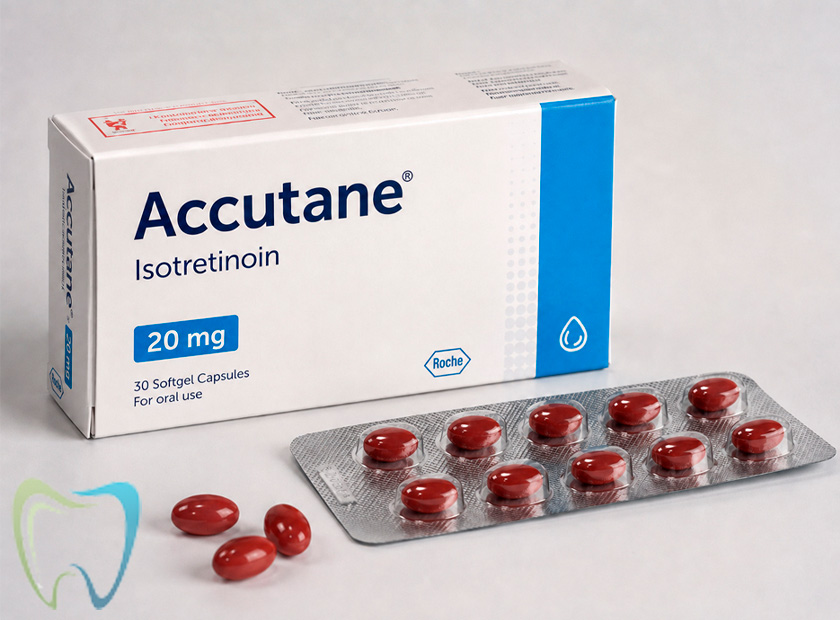
Accutane is the name many people still use for oral isotretinoin. The original Accutane brand was discontinued in the United States in 2009, but the active ingredient did not disappear. Today, isotretinoin is available under other brand and generic names. Patients often keep saying “Accutane” because that was the name that made the treatment widely known.
Isotretinoin is an oral retinoid derived from vitamin A. It belongs to the same broad family as topical retinoids such as tretinoin and adapalene, but it works differently. Creams and gels act mainly on the surface of the skin. Oral isotretinoin works throughout the body and targets several acne pathways at once. It reduces oil production, calms inflammation, and helps prevent the deep blockages that lead to nodules and cysts.
This is not usually a first-choice treatment for mild acne. Dermatologists consider isotretinoin when acne is severe, painful, scarring, or resistant to standard options like topical treatments and oral antibiotics. In some cases, acne also affects confidence, sleep, social life, or mental well-being. That wider impact can be part of the treatment decision too. Before you buy Accutane online, this medical fit matters more than the brand name or the price.
A typical course lasts several months, often around four to six months, although the exact plan depends on the patient. Doctors may adjust the dose based on body weight, response, side effects, and lab results. Many patients see long-term improvement after one course. Some need another course later, but many do not.
Accutane vs Generic Isotretinoin Brands
Generic isotretinoin contains the same active ingredient that was used in the original Accutane brand. The name on the box may be different, but the core medication is still isotretinoin. What can change is the capsule strength, shape, inactive ingredients, absorption profile, price, and insurance coverage. That is why two products can treat the same type of severe acne but still have different instructions from the prescriber or pharmacist.
In the United States, current isotretinoin products include names such as Claravis, Amnesteem, Myorisan, Zenatane, Absorica, and Absorica LD. Most standard isotretinoin capsules are usually taken with food because fat helps the body absorb the medication better. Absorica and Absorica LD were developed differently, so they may be taken with or without food. This does not make one option automatically “better” for every patient. It only means the practical instructions may vary.
A short comparison makes the difference easier to understand:
- Claravis, Amnesteem, Myorisan, and Zenatane — standard isotretinoin products that are usually taken with food.
- Absorica and Absorica LD — isotretinoin formulations designed for more flexible absorption with or without meals.
- All isotretinoin products require iPLEDGE enrollment and regular follow-up during treatment.
- The choice often depends on insurance coverage, pharmacy availability, dose strength, and the prescriber’s plan.
Prescribers usually try to keep the treatment course consistent once a patient starts. Switching between isotretinoin products is not something to do casually, especially with Absorica LD, which is not considered interchangeable with standard isotretinoin capsules. If a pharmacy suggests a change, the safest step is to confirm it with the prescriber first. The goal is not just to get “generic Accutane,” but to stay on a version that fits the treatment plan, absorption needs, safety monitoring, and iPLEDGE requirements.
Severe Acne That Resists Other Treatments
Dermatologists usually consider Accutane when acne keeps coming back despite proper treatment. This is not about a few pimples or a short flare. The concern is deeper acne that hurts, lasts for weeks, and starts leaving marks or scars.
Many patients reach this point after trying several options. A topical retinoid may help a little, but not enough. Benzoyl peroxide may calm surface inflammation, while deeper bumps continue to form. Antibiotics may work for a while, then the acne returns after the course ends. When this cycle repeats, isotretinoin becomes a more serious option to discuss.
Severe nodular acne often feels firm and tender under the skin. Cystic acne can look swollen, painful, and slow to heal. These breakouts are frustrating because they do not always respond to skincare changes. A person may wash gently, avoid picking, use the right creams, and still keep getting new lesions. That is one reason this type of acne often needs a different level of treatment.
A dermatologist does not look only at how the skin looks on one visit. The full pattern matters. How often do the flares return? Are scars forming? Has treatment stopped working? Is acne affecting confidence, sleep, school, work, or social life? These details help show whether the problem is mild, temporary, or becoming more damaging. Before you buy Accutane online, this kind of medical review is what helps decide whether isotretinoin is appropriate at all.
Several signs can make isotretinoin worth considering:
- Deep nodules or cysts keep returning.
- New scars or dark marks appear after breakouts.
- Acne improves during treatment but comes back soon after.
- Topical treatments and antibiotics have not controlled the acne.
- Breakouts affect confidence, daily routine, or social life.
- There is a family history of severe scarring acne.
In these cases, the goal changes. Treatment is no longer just about calming the current breakout. The aim is to stop the repeated cycle of inflammation, pain, and scarring. For many patients, that is the point where Accutane feels less like a last resort and more like a treatment that finally matches the severity of the problem.
How Accutane Shrinks Sebaceous Glands
Accutane works deeper than most acne treatments because it changes how the oil glands behave. These glands sit under the skin and release sebum, the oil that helps protect the skin barrier. In acne-prone skin, the glands may produce too much oil. That extra oil mixes with dead skin cells inside the pore. The pore becomes blocked, bacteria have more room to grow, and inflammation can follow.
Isotretinoin interrupts this process from several directions at once. It reduces the size and activity of the sebaceous glands. As oil production falls, the skin may feel less greasy. The forehead, nose, and chin often become less shiny. At the same time, the pores have less material inside them that can build up and trigger another deep breakout.
The medication also affects how skin cells shed inside the follicle. When shedding becomes more even, dead cells are less likely to collect in tight plugs. This matters because many painful acne lesions begin with a blocked pore. Less oil and fewer blocked follicles mean fewer places for inflammation to start.
There is also a bacterial and inflammatory side to the effect. Cutibacterium acnes can thrive in oily, blocked pores. When isotretinoin reduces that environment, the bacteria have less support. The immune reaction in the skin may also calm down. That is why new bumps often become less frequent, less swollen, and less painful over time.
According to StatPearls, isotretinoin works through several acne pathways, including sebaceous gland activity, sebum production, keratinization, and inflammation. This multi-target effect explains why it can help when single-path treatments have not been enough. Antibiotics mainly focus on bacteria. Topical retinoids work mostly where they are applied. Oral isotretinoin reaches the acne process from inside the body.
A simple example makes this easier to picture. Someone may use topical retinoids for months and still keep getting deep cysts. The surface of the skin may look calmer, but the oil glands may still be very active. During isotretinoin treatment, the source of that oil output changes. New lesions may form less often because the skin is no longer producing the same acne-friendly environment.
This is why the results can last after the course ends. The treatment is not just drying the skin for a few weeks. It is reducing the gland activity that helped drive the acne in the first place. That does not mean acne can never return. Some patients do relapse. Still, for many people with severe acne, this deeper change is what makes Accutane different from routine creams, washes, or short antibiotic courses.
Accutane Treatment Timeline and Final Results
Accutane does not usually clear severe acne in a few weeks. Treatment works gradually, and the skin often changes in stages. Some patients first notice dryness or less oil. Others may still see new breakouts during the early weeks before the pattern starts to slow down.
Most courses last several months, but the exact timeline depends on the treatment plan and how the skin responds. The important point is that progress is measured over months, not days. By the end of the course, many patients have far fewer active lesions, and some continue to improve after the last dose. Relapse can happen, but for many people the overall acne cycle becomes much weaker than before.
How Long Accutane Takes to Show Results
Accutane usually works slowly at first. Most people do not wake up with clearer skin after one or two weeks. The early stage is more about internal changes: oil production starts to fall, the skin becomes drier, and old clogged pores may still be working their way out.
Some patients notice the first real improvement during the second month. Others need more time. A short flare can also happen in the first several weeks. People often call this an Accutane purge. It does not happen to everyone, but when it does, it can feel discouraging. New spots may appear before the skin starts to calm down.
A simple timeline can help set realistic expectations:
This timeline is only a general pattern. Some patients improve earlier. Others move more slowly, especially if the acne was severe at the start. Side effects can also affect the pace of treatment. If dryness, irritation, or an early flare feels difficult, the prescriber may adjust the plan instead of stopping treatment completely.
The main point is patience. Accutane is not meant to act like a spot treatment. It works by changing the acne cycle over time. Early dryness or a short purge can happen before the visible results arrive. Regular follow-up helps the prescriber decide whether the course is moving in the right direction.
Accutane Cost With and Without Insurance
The medication does not change because of how you pay for it. With insurance or without insurance, a legitimate prescription should still lead to isotretinoin. The difference is the final price, approval process, and out-of-pocket cost.
Insurance can lower the pharmacy price, but some plans require prior authorization or proof that other acne treatments were tried first. Without insurance, the cost depends on the pharmacy, capsule strength, quantity, and brand. Generic isotretinoin usually costs less than premium branded options.
People who buy Accutane online through a licensed telehealth service should still receive prescription isotretinoin, not a different “online version.” The total cost may include the consultation, follow-up, lab work, and medication.
If you searched where to buy Accutane over the counter, the answer is simple: you cannot legally buy it that way. Isotretinoin is prescription-only in the United States, Canada, the United Kingdom, the European Union, and many other countries. Any site offering over-the-counter Accutane is a red flag.
Generic isotretinoin — same active ingredient as Accutane
| Package | Per pill | You save | Per pack |
|---|---|---|---|
| 20 pills | $2.88 | $33.14 | $90.76$57.62 |
| 30 pills | $2.33 | $66.28 | $136.14$69.86 |
| 60 pills | $1.78 | $165.70 | $272.28$106.58 |
| 90 pills | $1.59 | $265.12 | $408.42$143.30 |
| 120 pills | $1.50 | $364.54 | $544.56$180.02 |
| 180 pills | $1.41 | $563.39 | $816.84$253.45 |
A prescription may be issued only after an examination by a licensed medical professional.
Telehealth Dermatologists

How to Get Accutane Online Through Telehealth
Telehealth can make dermatology care easier to access. Instead of waiting weeks for an in-person visit, a patient may complete an online intake form, upload acne photos, and speak with a licensed clinician by video. If isotretinoin is appropriate, the prescription is sent to a pharmacy that can legally dispense it.
The process to buy Accutane online still follows the same safety rules as an office visit. A telehealth appointment does not remove the need for medical review, lab monitoring, or iPLEDGE steps. It simply moves part of the care process online.
Every legitimate Accutane buy must include iPLEDGE enrollment. This program applies to isotretinoin prescribing and dispensing in the United States. The clinic or platform may help with the process, but the patient still has required steps to complete. According to MedlinePlus, isotretinoin cannot be dispensed by a U.S. pharmacy unless the iPLEDGE requirements are met.
Some offers should raise concern right away. A site that promises Accutane with no consultation is not following normal safety standards. The same applies to sellers that skip iPLEDGE, avoid clinician contact, or give unclear pharmacy details. The product may be fake, mislabeled, or unsafe.
A real telehealth service may take more time upfront. That is not a drawback. It is part of what makes isotretinoin treatment safer. The review, prescription, pharmacy process, and follow-up are there to protect the patient before and during the course.
Eligibility check and acne photo upload.
Video visit with a licensed dermatologist.
iPLEDGE enrollment and baseline blood work.
Prescription sent to your partner pharmacy.
What Happens After Your First Accutane Prescription
After the first prescription, treatment starts to follow a clear routine. You take isotretinoin exactly as your prescriber explains. Some products are taken with food, while others may have different instructions. The important part is consistency. Try to take the medication at the same time each day and do not change the dose on your own.
The first few weeks help your prescriber understand how your body reacts. Dry lips and dry skin are common early changes. Some patients also notice nose dryness, mild irritation, or more sensitivity than usual. These effects should be mentioned during follow-up visits, especially if they start to interfere with daily life.
Monthly check-ins are part of Accutane treatment. They are not just formal appointments. Your prescriber reviews your skin, side effects, lab results, and iPLEDGE status when needed. The prescription is usually renewed one month at a time. This rule applies whether you buy Accutane online through a licensed service or receive care in person.
- Monthly refill:Most prescriptions are renewed one month at a time after the required check-in.
- iPLEDGE steps:Patients who can become pregnant must complete required pregnancy testing and program steps before each refill.
- Blood work:Your clinician may check liver enzymes and lipid levels before treatment and during the course.
- Side effects:Track dryness, mood changes, headaches, joint pain, digestive symptoms, or anything that feels unusual.
- Between visits:Contact your prescriber if symptoms feel strong, sudden, or different from what you expected.
- End of course:Your prescriber decides when the course can stop based on response, tolerance, and the treatment plan.
Finishing the last capsule does not always mean every instruction ends that day. Many side effects improve after treatment stops, but the skin can remain sensitive for a while. Your dermatologist may ask you to keep skincare simple, use sun protection, and avoid certain cosmetic procedures until the skin has recovered. The exact advice depends on your dose, side effects, and how your skin handled the course.
A good follow-up plan makes the transition easier. It can cover gentle cleansers, moisturizers, sunscreen, scar care, and when to restart any products that were paused during treatment. The goal is to protect the result without irritating skin that is still adjusting.
Accutane Side Effects From Mild to Serious
Accutane side effects are common, but most of them are predictable. The medication lowers oil production, so dryness is expected. Lips, skin, eyes, and the inside of the nose often feel the change first. For many patients, this is annoying rather than dangerous.
The important part is knowing what is normal, what should be mentioned at the next visit, and what needs faster medical attention. Not every symptom means something is wrong. Still, isotretinoin is strong medication. It works best when side effects are tracked instead of ignored.
Most patients deal mainly with dryness and sensitivity. These effects can be uncomfortable, but they are often manageable with the right routine. Blood test changes are different because you may not notice them at home. That is why follow-up visits matter even when the skin looks better and you feel fine.
According to Mayo Clinic, isotretinoin has a well-documented safety profile, and some reactions need medical review. The goal is not to scare patients away from treatment. The goal is to keep the course safe, controlled, and realistic from the start.
Everyday Side Effects and How to Manage Them
The most familiar Accutane effect is dry lips. For many patients, it starts early and stays through most of the course. Regular lip balm is usually not enough. A thicker ointment with petrolatum often works better, especially at night. It also helps to keep one balm in a bag, one near the bed, and one near the desk.
Dry skin needs the same steady approach. A gentle cleanser, a plain moisturizer, and sunscreen are usually enough. Strong acne washes, scrubs, peeling acids, and harsh spot treatments can make irritation worse. During isotretinoin treatment, “simple” skincare is often the better skincare.
The nose can also feel different. Less oil may make it look less shiny. Some people notice mild dryness inside the nostrils or occasional nosebleeds. Saline spray and a small amount of ointment around the nostril opening may help. If bleeding becomes frequent or heavy, it should be discussed with the prescriber.
Hair shedding can happen, but it is not the main experience for most patients. When it appears, it is often temporary. Gentle shampoo, less heat styling, and avoiding tight hairstyles can reduce extra stress on the hair. Sudden or heavy shedding deserves a check-in, especially if fatigue, diet changes, or other symptoms are also present.
Weight changes are not a reliable Accutane effect. Some patients eat less because their lips or mouth feel uncomfortable. Others move less if they feel tired or sore. The medication itself is not usually framed as a direct weight-gain drug. A noticeable or fast change in weight should be reviewed instead of guessed about.
Alcohol is different because it overlaps with liver monitoring. Isotretinoin can affect liver enzymes and triglycerides, and alcohol can add more strain. The safest approach is to avoid alcohol during treatment unless your prescriber gives different advice for your case. This is one more reason prescription oversight matters. Anyone wondering where to buy Accutane over the counter should understand that side effects and lab results need real monitoring, not guesswork from an unverified seller.
Accutane Babies: Pregnancy Risk and iPLEDGE Rules
The phrase “Accutane babies” is used for children born with severe birth defects after exposure to isotretinoin during pregnancy. This is why pregnancy safety is treated so seriously with Accutane. Isotretinoin can affect fetal development, especially the brain, heart, face, ears, and other organs. There is no approved safe use of this medication during pregnancy.
For that reason, the FDA requires the iPLEDGE Risk Evaluation and Mitigation Strategy. Every prescriber, patient, and pharmacy involved with isotretinoin must follow the program rules. iPLEDGE is not meant to make treatment harder for no reason. It exists to prevent pregnancy exposure during treatment. The full requirements are listed on the official iPLEDGE REMS website.
The program separates patients into groups based on whether they can become pregnant. Patients who can become pregnant follow stricter steps. These usually include pregnancy testing, contraception requirements, and monthly confirmation before each refill. Patients who cannot become pregnant still complete enrollment and regular check-ins, but their process is shorter.
This safety system may feel strict, but it has a clear purpose. Isotretinoin can be very effective for severe acne, but it must be used with careful rules. iPLEDGE helps make sure the medication is prescribed, filled, and taken in a way that protects the patient and prevents pregnancy-related harm.
- All patients enroll before the first prescription is written.
- Patients who can become pregnant must use two forms of effective contraception. The plan starts one month before treatment.
- Monthly pregnancy tests are required before each refill. Two negative tests are needed before the first dose.
- Contraception continues for one month after the last dose.
- Prescriptions cannot be filled more than seven days after they are written.
- Donating blood is not allowed during treatment. The restriction extends one month after the last dose. This prevents any transfusion to a pregnant recipient.
Family members and partners should understand the basic iPLEDGE rules too. Isotretinoin should never be shared with anyone, even if that person also has acne. Capsules should also be stored safely and kept away from children. These rules may sound simple, but they help prevent the most serious kind of mistake: someone taking the medication without medical supervision.
A patient should contact the prescriber right away if pregnancy happens during treatment or within one month after stopping isotretinoin. This is not about blame or punishment. It is about fast medical support and proper reporting. The iPLEDGE pregnancy registry helps track outcomes and improve safety for future patients.
The rules feel strict because the pregnancy risk is serious. Most patients who follow the process complete treatment without this complication. The danger increases when someone tries to skip the system through unregulated sellers. That is the real cost of bypassing iPLEDGE. It is also one of the strongest reasons to use only a licensed prescriber when you buy Accutane online.
The iPLEDGE program also applies to male patients. This surprises some people, because the pregnancy testing rules are not the same for everyone. Male patients do not need pregnancy tests, but they still enroll in the program and follow safe-use requirements. They should not share capsules, and they must follow blood donation restrictions. Donated blood could theoretically reach a pregnant recipient, so this rule matters for every patient.
Recent FDA-approved changes also make the program a little more practical. In many cases, prescribers may allow pregnancy testing outside a medical setting during and after treatment, including at-home testing. Pre-treatment pregnancy testing still needs to happen in a medical setting. The goal is to reduce unnecessary burden while keeping the core safety protections in place.
Low-Dose and Microdose Accutane Protocols
Not every Accutane course looks the same. Some patients tolerate a standard plan well. Others struggle with dryness, joint discomfort, headaches, or changes in blood tests. In those cases, a dermatologist may consider a lower-dose approach. The goal is still acne control, but the path is usually slower and gentler.
Low-dose Accutane usually means taking a smaller daily amount over a longer period. This can make treatment easier to tolerate. The tradeoff is time. Skin may clear more gradually, and the course may last longer than a standard plan. For some patients, that slower pace is worth it because side effects feel more manageable.
Microdose Accutane is a more specialized idea. It is sometimes discussed for long-term control in selected patients, especially after a previous course or in cases with persistent oiliness and mild recurring flares. This is not the same as a standard FDA-labeled acne course. It should only be considered with a clinician who understands isotretinoin, iPLEDGE, lab monitoring, and the patient’s full history.
A lower-dose plan can be useful for patients who need a more tolerable course. It can also help when the main issue is persistent oiliness or repeated mild flares after stronger treatment. Still, the decision should happen during a real consultation. Anyone who plans to buy Accutane online should discuss low-dose options with the prescribing clinician before starting. The safest plan is the one that fits your acne pattern, medical history, side effects, and monitoring needs.
About The Author

Disclaimer
This article is for educational purposes only. It does not constitute medical advice. Accutane and generic isotretinoin are prescription medications. They must be evaluated and prescribed by a licensed clinician. Always discuss your symptoms with a qualified healthcare professional. Share your medical history and current medications before starting any new therapy.